
Leaving the Rat Race
Rich Dad Poor DadThis thread traces the book’s recurring contrast between wage dependence and the gradual creation of income-producing assets.
increasing Bearing strength in each event
 decreasing
Bearing strength in each eventdecreasingThe Repeating Routine

A Predictable Circuit
Work and Obligations
Rich Dad describes a familiar sequence: education, employment, spending, family commitments, and increasingly demanding bills. Raises arrive, but new expenses and taxes often absorb them.
The Rat Race Named
Workers become dependent on employers, government, and lenders while passing the same advice to their children. Naming the pattern lets the boys recognize it as a structure rather than a personal destiny.
The Fear Behind Wages

Emotion and Employment
Fear’s Momentum
Rich Dad argues that fear of unpaid bills can push people into work without inviting them to question whether that work solves the longer problem. Desire for more comforts then reinforces the cycle.
A Pause for Thought
The lesson asks Robert and Mike to observe their emotions instead of letting them decide automatically. That pause opens the possibility of choosing a different financial response.
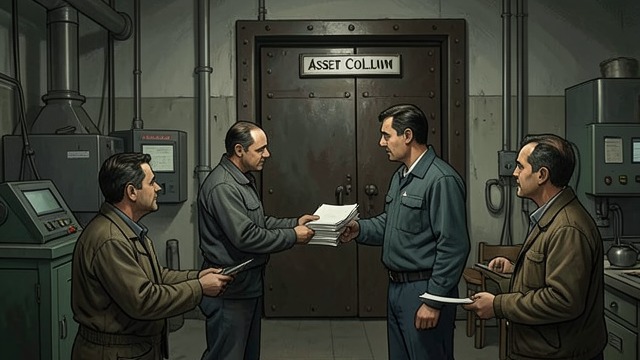
The Asset Column

Money at Work
A Small Alternative
The comic-book library demonstrates how a business can generate fees beyond the hours its founders personally work. It is modest, but its system gives the boys a glimpse of income not tied directly to a wage.
A Changed Focus
Rich Dad treats their experiment as a lesson in directing effort toward an asset. The point is not immediate riches, but a shift in what they learn to build.
Building Through Employment
Work and Ownership
Two Activities at Once
Robert keeps a job while directing commissions and attention toward investments. Employment provides cash, while the asset column becomes the project he intends to grow for himself.
A Different Purpose
Rich Dad’s question about whom a worker makes rich gains force in Robert’s career. Working hard remains part of the story, but it is no longer the sole measure of progress.
A Route Toward Freedom

Work Becomes Optional
Assets Accumulate
Robert describes retirement as the point at which assets can grow without requiring his constant labor. He and Kim retain the choice to work, but no longer depend on a paycheck in the same way.
The Rat Race Reversed
The contrast with wage dependence completes the book’s central arc. Financial freedom is presented as an outcome of long-term learning and asset-building, not a sudden escape from effort.
In Rich Dad’s first explanation of adult working life
During the first lesson’s park conversation
As the boys interpret the comic-book venture
During Robert T. Kiyosaki’s years at Xerox
At Robert T. Kiyosaki’s retirement at forty-seven
